Sectional vs Sofa: Key Differences, Pros & Cons, and How to Choose the Right One
You want enough seating for movie night, but you also need a clear path through the living room. A large sectional looks inviting until its return blocks the doorway; a straight sofa looks tidy until everyone competes for the same lounging spot.
Choosing the wrong arrangement can mean working around your furniture every day. The sectional couch vs sofa decision becomes easier when you compare the whole seating plan, including chairs, tables, and the space people need to move.
Here is how the options differ, where each works well, and what to measure before you buy.
TL;DR — Sectional or Sofa?
Choose a sectional when you want connected seating and a layout that supports shared lounging; choose a straight sofa when you prefer separate seating pieces or need more freedom to position them. If rearrangement matters, check the construction: a modular design may support multiple layouts, but not every sectional does.
Compare a MastonHome L-Shaped Modular Cloud Sofa
What’s a Sectional, and How Is It Different From a Sofa?
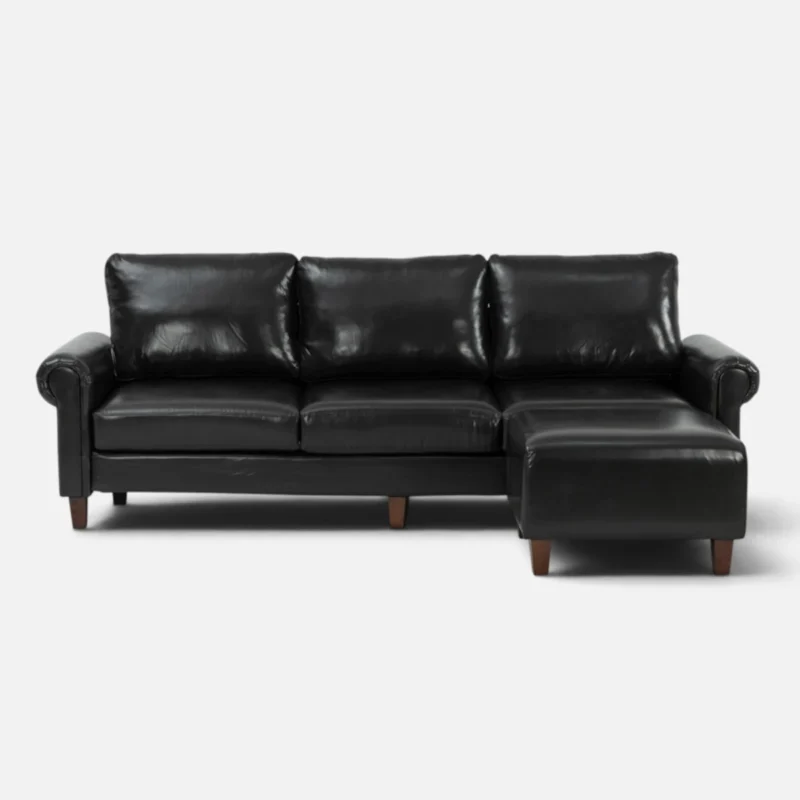
A sectional is a sofa made from multiple seating sections arranged together as a larger unit. Its layout may include a corner, chaise, or return, creating an L-shaped, U-shaped, or other connected arrangement.
In this guide, a traditional couch means a conventional straight sofa, rather than a particular decorative style. It usually provides seating in one line and can be paired with armchairs or an ottoman.
Technically, a sectional is a type of sofa. When shoppers compare a sectional with a sofa, they are usually comparing a connected seating arrangement with a straight couch.
Sectional Couch vs Sofa at a Glance
Consideration
Sectional
Straight sofa
Layout
Connected sections, often with a corner or chaise
One straight seating unit
Seating arrangement
Groups people within one larger footprint
Can be combined with separate chairs
Lounging
A chaise or return may provide space to stretch out
May need an ottoman or a longer seat run
Circulation
Returns can shape or restrict routes
Often leaves more open choices around its ends
Flexibility
Depends on modules, orientation, and connectors
Easier to reposition independently of other seats
Delivery
Check the largest packaged module
Check the full sofa package and turning space
Cost comparison
Compare the complete configuration
Include any chairs or ottoman you also need
Neither category is automatically smaller, cheaper, or more comfortable. Compare actual dimensions and the complete room arrangement rather than the category name alone.
The Pros and Cons of a Sectional
Pro — Connected Seating for Shared Downtime
A sectional keeps several seating positions together, which can suit households that watch movies, play games, or relax in the same zone. A corner or chaise may also create a favorite place to curl up.
Look beyond the advertised seat count. Consider whether people will sit upright, stretch across cushions, or use the corner differently from a regular seat.
Pro — A Defined Living Area
An L-shaped sectional can mark the edge of a living area in an open-plan room. The return helps establish the seating zone without adding a separate divider.
This works best when the layout preserves a convenient route to nearby rooms. A sofa back used as a boundary should also have the finish and appearance you want to see from behind.
Con — A Larger Footprint to Plan Around
The section extending into the room can interfere with a doorway, cabinet, or table. Measure the full width and depth, including the longest return, rather than only the back of the sofa.
A smaller sectional can fit well in a modest room, but the shape must work with the room’s openings and routes.
Con — Some Layouts Are Fixed
A sectional that separates for delivery may still need to be assembled in one prescribed arrangement. A fixed left-side chaise will not necessarily move to the right if you rearrange the room.
Check the configuration diagram and assembly instructions before assuming that a sectional can change shape.
The Pros and Cons of a Traditional Couch
Pro — More Choice in Positioning Separate Seats
A straight sofa and two chairs can face one another, angle toward a table, or shift independently when the room changes. This can suit households that value conversation seating or move frequently.
You can also build the room in stages, starting with a couch and adding a chair later if the space and budget allow.
Pro — A Simple Starting Point for Narrow Rooms
A straight sofa may work along a long wall while leaving the opposite side open. It is worth comparing when a sectional return would cut across a busy path.
Still check the full arrangement. A sofa plus several chairs can occupy more space than a carefully selected sectional.
Con — Lounging May Require Another Piece
If you like to put your feet up, you may want an ottoman. That adds another footprint to position and can reduce the open floor area you hoped to preserve.
Con — Group Seating Can Become Spread Out
Separate chairs offer independence, but they may not create the connected lounge area your household wants. Think about whether your priority is shared lounging or distinct places to sit.
Modular vs Sectional Sofa: What Is the Difference?
Sectional describes a sofa assembled from seating sections; modular describes a component system designed for supported combinations. The terms overlap, but they answer different questions.
A modular sofa can form a sectional arrangement. Depending on its components, it may also support a straight run or other layouts. A sectional with a set configuration may have far fewer options.
Question
Why it matters
Which arrangements do the included pieces support?
Shows what you can build with this purchase
Are end and corner pieces interchangeable?
Determines where modules can actually go
How are the sections connected?
Helps you understand assembly and repositioning
Can you buy compatible modules separately?
Matters if you want to expand later
Do not assume that modular means unlimited arrangements, guaranteed future expansion, or compatibility across different collections.
How to Choose the Right Seating for Your Room
Step 1 — Decide How You Use the Room
Start with a typical evening. If several people stretch out together, compare chaise and sectional layouts. If guests often sit facing one another, sketch a straight sofa with chairs as an alternative.
Separate must-haves from occasional needs. A layout that works for daily life is more useful than one designed only for the largest gathering you might host.
Step 2 — Tape Out Two Complete Layouts
Mark the sectional’s outline on the floor with painter’s tape. Then compare a sofa-and-chair arrangement, including the table and any ottoman.
Walk through each plan, open nearby doors, and check access to every seat. Include extra operating space if any selected furniture reclines, converts to a bed, or has a lifting storage lid.
Step 3 — Compare Comfort Measurements
Check usable seat depth, seat height, back support, and cushion information where available. An oversized seat may suit someone who curls up, while another person may prefer a more upright position with their feet comfortably on the floor.
Cloud-style is a description, not a guarantee of a particular filling or firmness. Choose using the documented construction and your own seating preferences.
Step 4 — Check Delivery and Total Cost
Measure entryways, stairs, hallway turns, and elevator openings. Compare them with the largest packaged component, not just the assembled dimensions.
Compare complete costs too. A sofa may need chairs and an ottoman to meet the same seating brief, while a sectional may require a different table or rug to work in your space.
Three MastonHome Options to Compare
Once you know the layout you want, compare these MastonHome options by their listed format. Use each product’s current diagram and specifications to confirm the exact configuration before ordering.
For an L-Shaped Lounge Zone
Start with the MastonHome 108-inch L-Shape 6-Seat Oversized Sectional when you want to explore connected corner seating.
Compare the selected configuration’s full return depth with your room’s walking routes. Confirm the 108-inch option’s included pieces and supported layouts on its own product page.
For a Shorter Sofa Format With a Storage Ottoman
Consider the MastonHome 80.8-inch Cloud Sofa Loveseat With Storage Ottoman when you are comparing a shorter main seating run and an accompanying ottoman.
Review the complete arrangement’s footprint, ottoman placement, and lid clearance rather than judging the fit by sofa width alone. Confirm the included ottoman and storage details for your selected configuration.
For a Larger Corner-Oriented Gathering Area
Explore the MastonHome 113-inch V-Shaped 7-Seat Modular Cloud Couch when your plan calls for seating extending in two directions.
Check the overhead layout: V-shaped terminology varies, and the actual corner angle and side dimensions matter more than the label. Confirm the washable components for your chosen variant and follow its care label for wash and drying settings.
These are three starting points for different room plans. The right choice depends on the complete footprint, usable seating, and configuration you select.
Frequently Asked Questions
Is a sectional better than a sofa?
A sectional may be better for connected lounging, while a straight sofa may suit a layout with independently positioned chairs. Choose based on your room and seating habits rather than assuming either category is always better.
What’s a sectional couch?
A sectional couch combines multiple seating sections into one larger arrangement. It may include a corner or chaise, although the permitted layout depends on the design.
Can a sectional work in a small living room?
Yes, if its full footprint and orientation preserve the routes you need. Compare a smaller sectional with the complete sofa-and-chair alternative before deciding which uses the space more effectively.
What is the difference between modular and sectional sofas?
Modular describes components intended for supported combinations; sectional describes a sofa made from sections. Some sofas are both modular and sectional, while others have a prescribed sectional layout.
Choose for the Way You Want to Live
A sectional creates connected seating; a straight couch leaves room to organize separate pieces around it. Start with your daily routine, compare complete floor plans, and check the exact dimensions before choosing.
Ready to build your shortlist? Explore the MastonHome 108-inch L-Shaped Modular Cloud Sofa, or compare the loveseat-and-ottoman and V-shaped options above against your room plan.
 FREE SHIPPING