Types of Sectional Sofas: A Complete Guide to Shapes, Styles & How to Choose
A sectional looks perfect in a showroom photo, but will its chaise block your doorway? Will everyone have a comfortable seat, or will the corner become an awkward place nobody uses?
Buying by appearance alone can leave you with a sofa that crowds the room or faces the wrong way. Understanding the different types of sectional sofas helps you choose a layout that supports the way you relax, host, and move through your home.
Start with the shape, then consider construction, comfort, and features. This guide explains what each term means and how to turn a long product list into a practical shortlist.
TL;DR — Which Sectional Should You Choose?
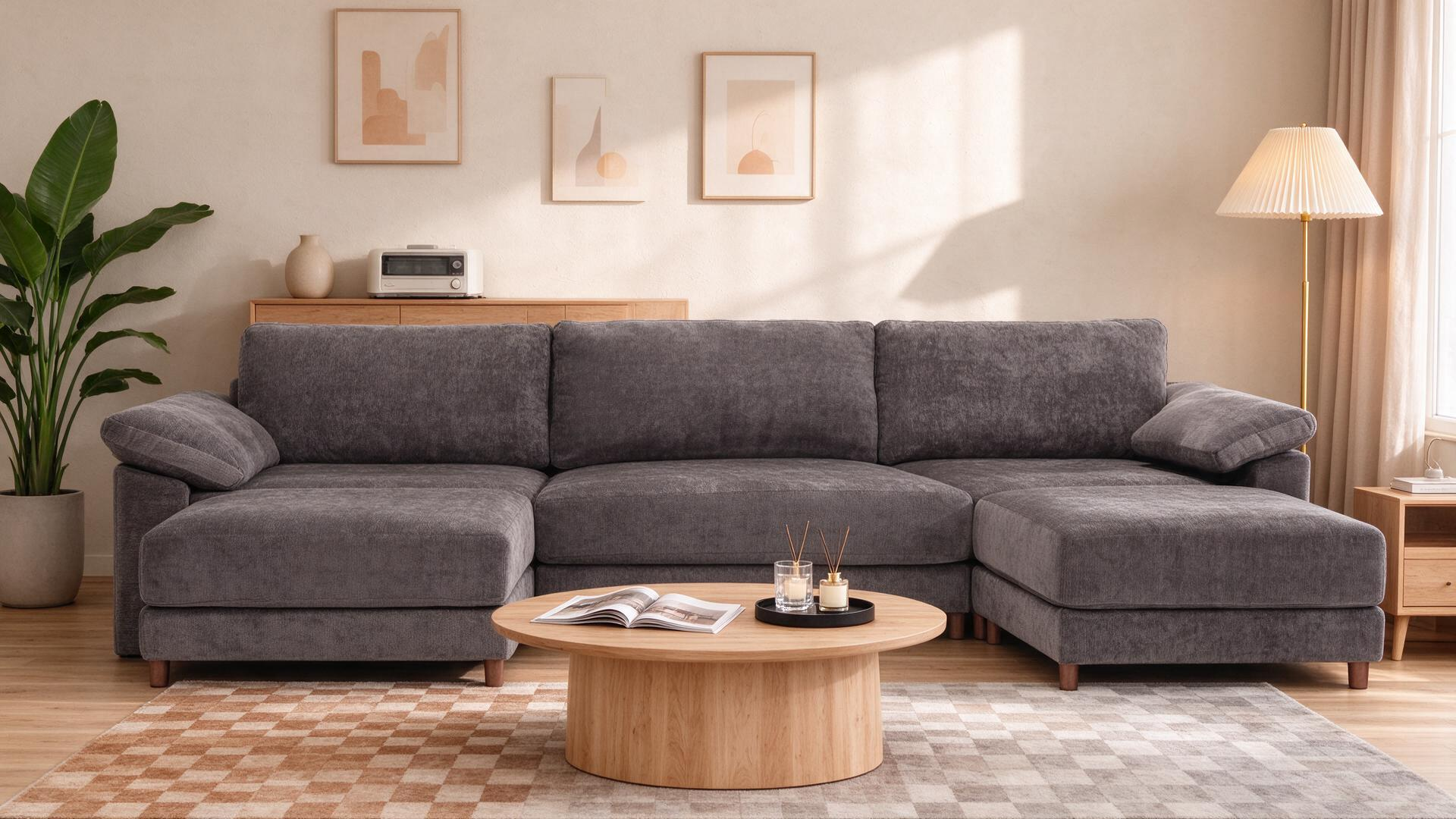
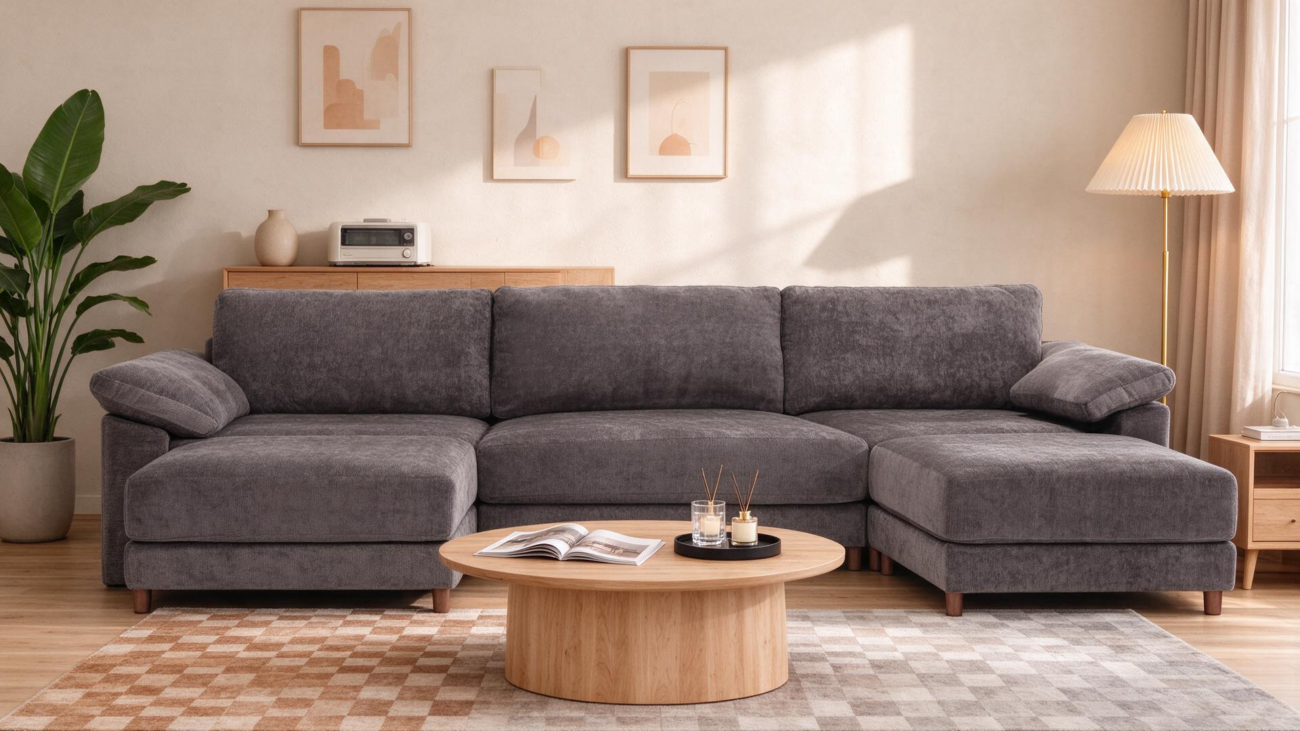
Start with an L-shaped or chaise sectional when you want an open side, and compare U-shaped or larger corner layouts when you need a more enclosed gathering area. Choose modular construction if rearrangement matters, then verify the actual footprint and permitted configurations.
Explore MastonHome’s L-Shaped Modular Cloud Sofa
What Is a Sectional?
A sectional is a sofa made from multiple seating sections arranged together as one larger seating unit. Those sections may include a sofa segment, corner seat, chaise, or other compatible components.
A standard sofa usually forms one straight seating unit. A sectional combines sections to create a longer, angled, or wraparound arrangement, although some modular designs can also form a straight run.
The important distinction is that sectional does not automatically mean freely rearrangeable. Some sectionals have a prescribed layout; others use modules designed for several approved configurations.
Understand Shape, Construction, and Features
These labels describe different aspects of a sofa, so they can overlap. One product can be an L-shaped modular sectional with a sleeper function and a contemporary style.
Category
What it describes
Examples
Shape
The arrangement viewed from above
L-shaped, U-shaped, curved
Construction
How the sections are organized
Set-layout sectional, modular sectional
Features
What the sofa can do
Sleeper, reclining, storage
Style and feel
Its appearance and seating character
Traditional, contemporary, cloud-style
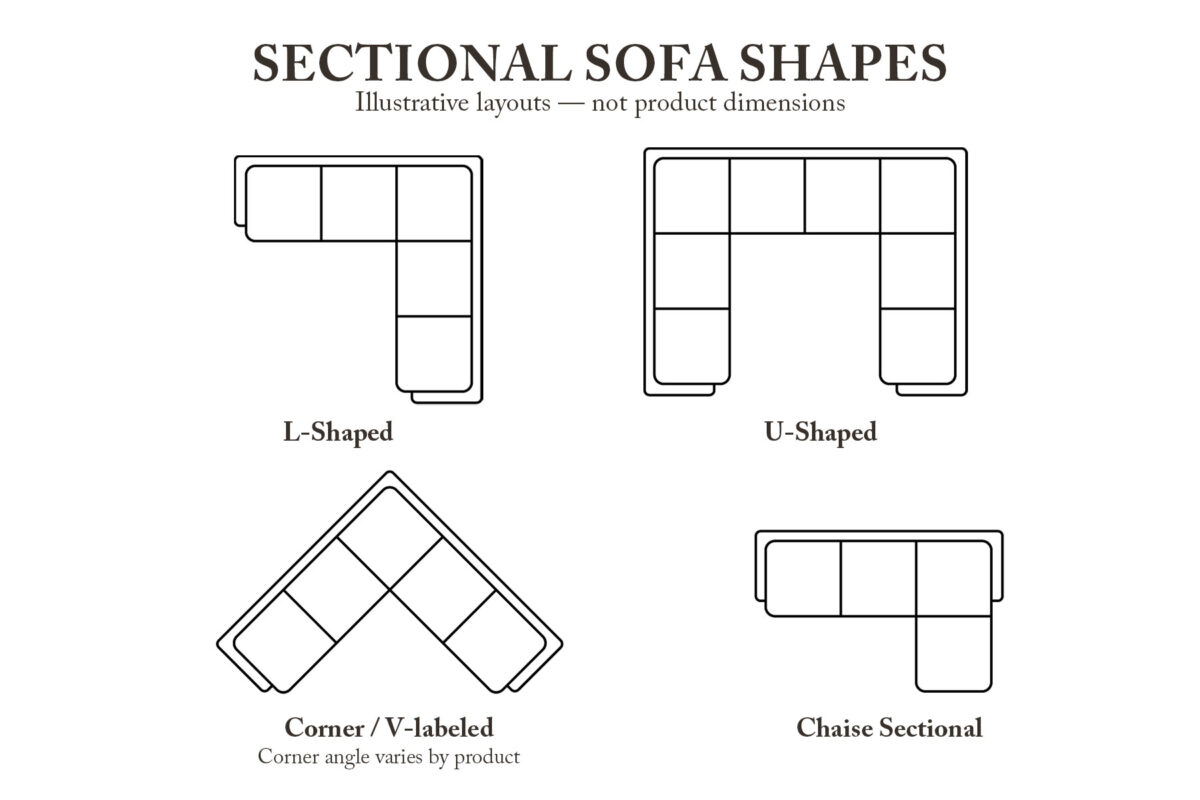
Types of Sectional Sofas by Shape
L-Shaped Sectionals
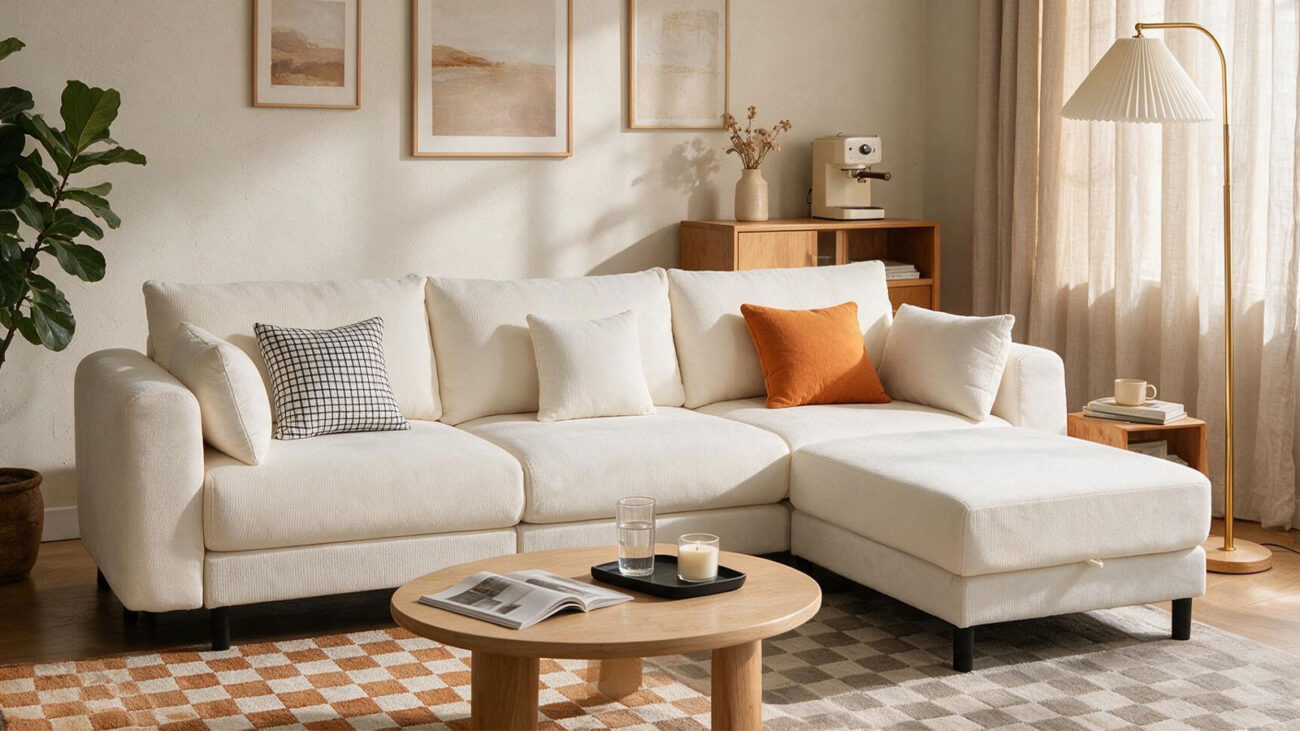
An L-shaped sectional has two connected runs that form a right-angle layout. One side may be shorter, and some products use an extended chaise to create the L-shaped footprint.
Consider this shape when you want to define a living area while keeping one side open. It can sit along two walls or float in an open-plan room, provided the back is suitable for display and the surrounding routes stay clear.
Check both legs of the L. The shorter return can still interfere with a doorway, cabinet, or route to the dining area.
Chaise Sectionals
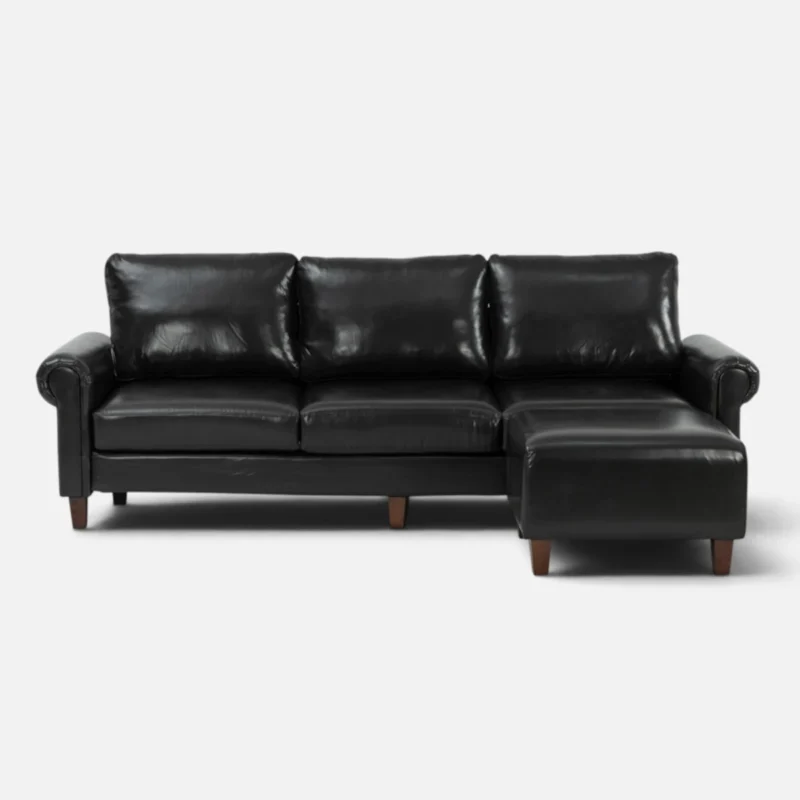
A chaise sectional pairs upright seating with an extended lounging area. It suits households where someone regularly wants to put their feet up without using a separate ottoman.
Check the chaise orientation in the layout diagram. Left-facing and right-facing terminology can be confusing, so confirm the seller’s viewing convention rather than relying on the label alone.
Also check whether the chaise is reversible. A fixed chaise cannot necessarily move to the other end after delivery.
U-Shaped Sectionals
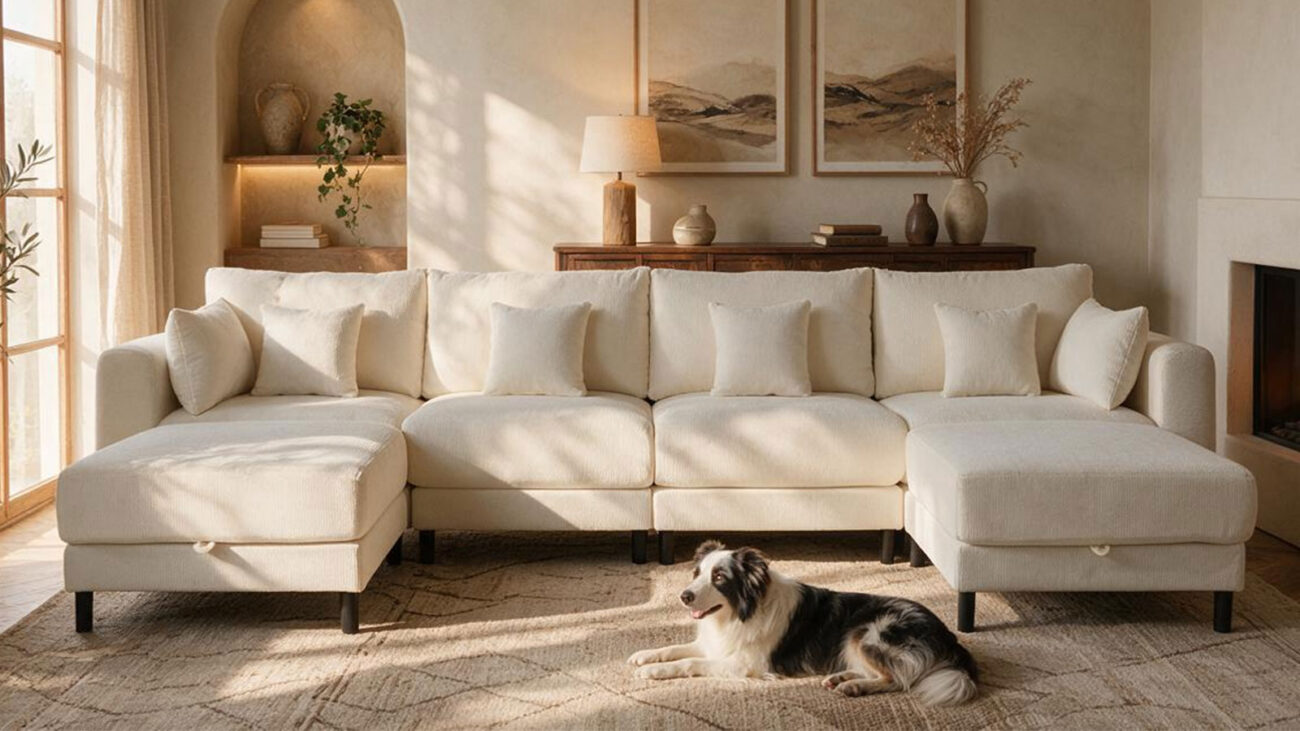
A U-shaped sectional extends on both sides of a central seating run. The shape can create a gathering area with seats facing inward as well as toward a screen.
It is worth considering for shared lounging and larger seating zones. Measure the center opening, coffee-table area, and access to the inner seats; a U shape that technically fits can still feel difficult to enter.
V-Shaped and Corner Layouts
Sellers sometimes use V-shaped to describe a corner arrangement with seating extending in two directions. The term is not consistent across brands: it may describe a conventional corner layout or a more open angle.
Use the overhead diagram to judge the actual shape. Check the corner angle, the length of each side, and whether the corner offers the kind of sitting or lounging position you want.
Curved Sectionals
Curved sectionals form an arc rather than a sharp corner. They can work around a central table or create a conversation area where a straight-backed arrangement feels too rigid.
Measure their full bounding footprint. The open space behind or inside a curve may be harder to use than the same area beside a straight sofa.
Modular Sectionals vs. Sectionals With a Set Layout
Modular sectionals use individual components designed to combine in supported arrangements. A sectional with a set layout may separate for transport yet still need to return to its original configuration.
Before choosing a modular sectional sofa, ask:
Which layouts are supported by the included pieces?
Can the corner and end modules change positions?
Are connectors required to hold the arrangement together?
Can additional compatible modules be purchased separately?
Modularity does not guarantee that every piece fits every position, or that future additions will remain available. Plan around the configurations confirmed for the model you buy.
Sectional Styles and Features to Consider
Cloud-Style and Oversized Sectionals
Cloud-style generally describes a relaxed, plush-looking design rather than a standardized cushion construction. Oversized describes scale, but it does not tell you the usable seat depth or how supportive a cushion will feel.
Compare seat depth, seat height, back support, and cushion materials when those details are available. Someone who likes upright conversation seating may prefer a different setup from someone who spends evenings curled up with a blanket.
Sleeper Sectionals
A sleeper sectional includes a mechanism or conversion designed to create a sleeping surface. A sofa with enough space to stretch out is not automatically a sleeper.
Check the opened dimensions and the conversion instructions. Leave room to operate the mechanism without having to move heavy furniture every time.
Reclining and Storage Sectionals
Reclining sectionals add adjustable seating positions, while storage models provide compartments in selected components. Either feature can change how much usable floor space the sofa needs.
Check recliner clearance, power access where applicable, and whether storage lids can open beside nearby furniture. Verify these features on the exact product rather than assuming they come with a particular shape.
Compare Sectional Layouts at a Glance
Your priority
Layout to consider
What to check first
Keep one side open
L-shaped or chaise
Return depth and chaise direction
Create a shared gathering area
U-shaped
Center opening and access routes
Use two sides of a seating zone
Corner or V-labeled layout
Actual corner angle and both side lengths
Build a softer conversation arrangement
Curved
Full footprint and table placement
Change the layout over time
Modular construction
Supported combinations and connectors
Accommodate overnight guests
Sleeper feature
Opened bed dimensions and mechanism clearance
How to Choose a Sectional for Your Living Room
Step 1 — Map the Room and Delivery Route
Measure the room, then mark doors, windows, vents, and frequently used routes. Use painter’s tape to outline the sofa’s full footprint, including the chaise or return.
Measure doorways, hall turns, stairs, and elevator openings too. For delivery, compare those measurements with the largest packaged component, not just the assembled sofa.
Step 2 — Plan for Actual Seating Habits
Decide how many people usually sit upright at once and how many prefer to lounge. A chaise can be valuable to one person stretching out while contributing differently to a group conversation setup.
Do not choose by the advertised seat count alone. Look at usable cushion space, the corner position, and where people will put their feet.
Step 3 — Test the Layout Before Ordering
Walk around the taped outline while carrying a laundry basket or tray. Check whether you can open nearby doors, reach the table, and get to a seat without squeezing between furniture.
For example, a 108-inch run is 9 feet long, while a 141-inch run is 11 feet 9 inches. That 33-inch difference is substantial, but neither number reveals the sofa’s full depth or return dimensions.
Step 4 — Check Care and Everyday Upkeep
Match the upholstery’s documented care requirements to your household. Check whether covers are removable, how they may be cleaned, and what cushion maintenance is required.
Do not treat removable covers as proof of machine washability, or a cloud-style appearance as proof of a particular filling. Read the specifications for the exact option you select.
Explore MastonHome Oversized Modular Cloud Sofas
If your shortlist centers on an oversized sectional couch for the living room, compare the MastonHome modular cloud sofa options below. Start with the footprint you can accommodate, then review the product’s layout diagram and included components.
Look Beyond the Cloud-Sofa Label
Compare usable seat depth, cushion support, and back height when choosing an oversized cloud-style sofa. Actual firmness and comfort depend on the selected model and your seating preferences.
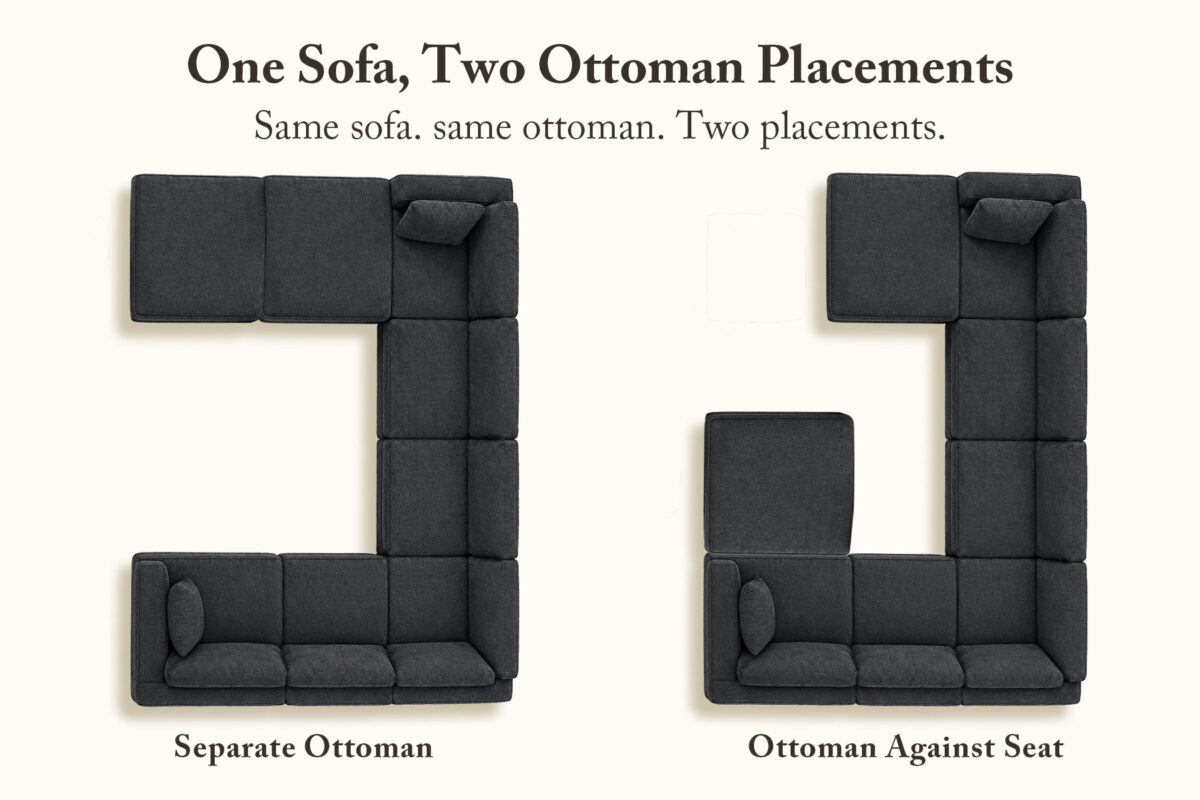
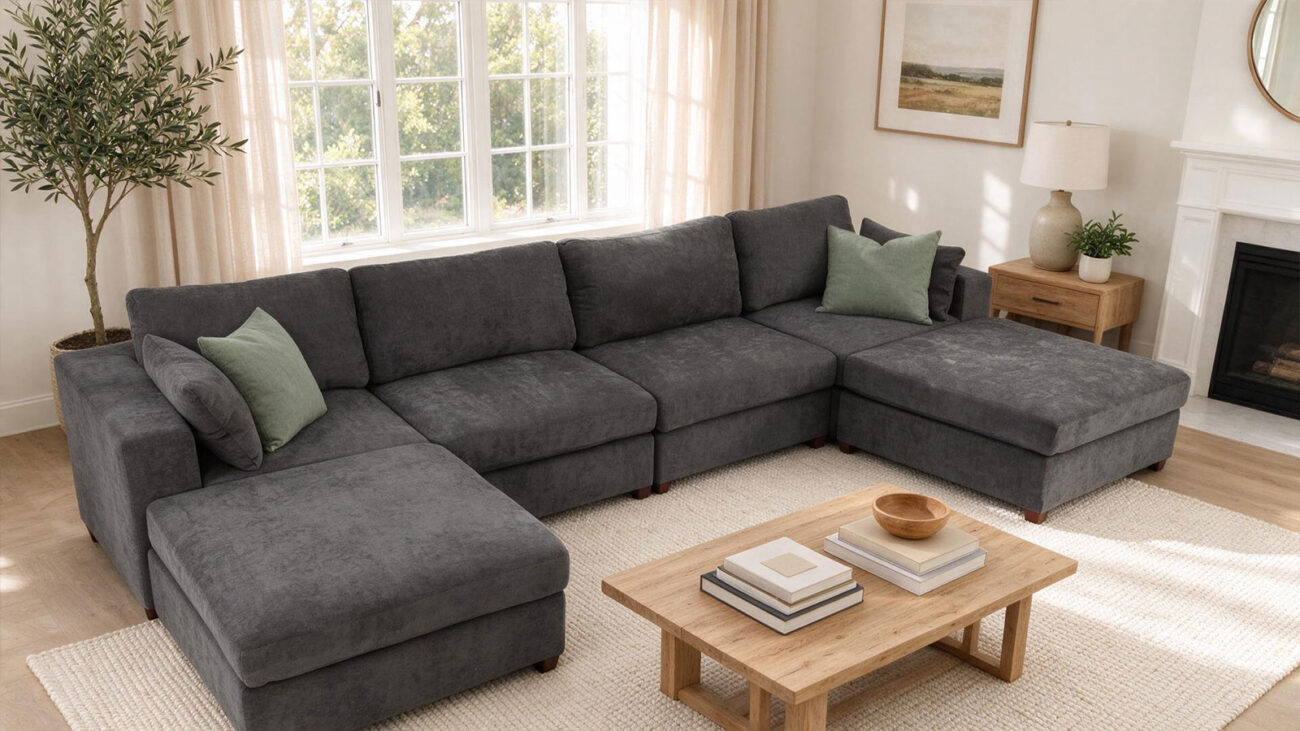
A single extension can leave one side of a seating area more open; extensions at both ends give more than one person a place to stretch out. Match the selected product’s layout to your room rather than assuming every arrangement pictured is included or achievable with one set.
Detail to compare
How to use it when choosing
Deep, oversized seating
Compare usable seat depth with how you sit, curl up, or lounge
High-density support foam
Consider support alongside cushion feel; the label alone does not establish firmness
Full back cushions
Check back height and whether the seated posture suits you
Different lounging layouts
Confirm the selected configuration, included pieces, and walking routes
Start With the 108-Inch L-Shape Option
Compare the MastonHome 108-inch L-Shape 6-Seat Sectional when you are evaluating the shorter listed size. Check its complete dimensions rather than assuming the 108-inch measurement describes every side.
Compare the Larger 141-Inch Option
Explore the MastonHome 141-inch Oversized Modular Cloud Sofa when your room can accommodate a larger seating footprint. Map the selected configuration before deciding whether the additional scale improves your layout.
Review the 141-Inch V-Shape Layout
Look at the MastonHome 141-inch V-Shape 7-Seat Sectional if you are comparing corner-oriented seating arrangements. Use the product diagram to confirm the angle, usable seats, and routes around the sofa.
Frequently Asked Questions
What is a sectional, and how is it different from a sofa?
A sectional combines multiple seating sections into one arrangement. A conventional sofa usually forms a single straight unit; a sectional may add a corner, return, or chaise.
What are the main types of sectional sofas?
Common shapes include L-shaped, chaise, U-shaped, corner, and curved layouts. Modular describes construction, while sleeper and reclining describe features, so these terms can overlap.
Is a modular sofa the same as a sectional?
The terms overlap, but they are not identical. A modular sofa uses components intended for supported combinations; some sectionals have a prescribed arrangement with little flexibility.
Does a cloud-style sectional have to use feather filling?
No. Cloud-style describes an appearance and seating concept rather than a required filling. Check the exact model’s cushion specifications instead of inferring its filling from the cloud-sofa name.
Can a sectional work in a small living room?
Yes, if its full footprint, orientation, and delivery dimensions suit the space. Compare a compact L-shaped or chaise layout with a standard sofa and chairs, then choose the arrangement that preserves your essential routes.
Choose the Layout That Fits Your Daily Life
Start with how you want the room to work: open circulation, shared conversation, or space to stretch out. Then match the shape, construction, and features to that plan.
Ready to compare options? Explore MastonHome’s 108-inch L-Shaped Modular Cloud Sofa, or review the 141-inch options above with your room measurements nearby.
 FREE SHIPPING